Brian Travis testified for the defense on Day 19 about a composite timeline built from cell-phone, bank, receipt, and electronic-device data. Cross-examination addressed the limits of its location inferences and later-source data.
Expert witness
Brian Travis
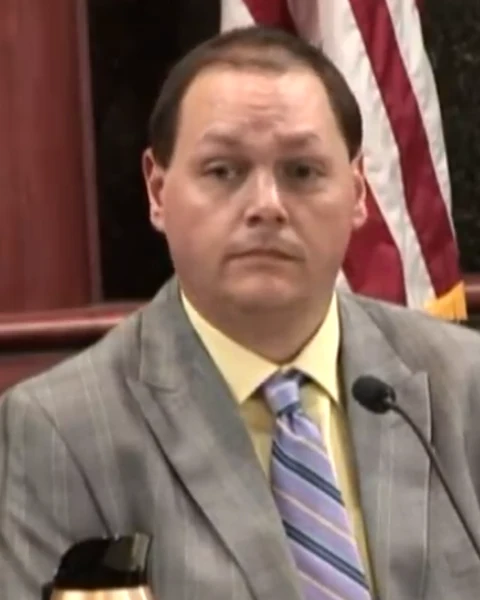
Lexington County Sheriff's Department detective assigned to criminal-intelligence analysis.
Appeared2019 Murder Trial
265 lines·7 proceedings·5 mentions
About
Brian Travis, a Lexington County Sheriff's Department criminal intelligence analyst, testified for the defense on Day 19 about a timeline he assembled from cell-phone information, receipts, bank records, and other electronic-device data. The court admitted the timeline as Defense Exhibit 212 without objection.
Before his later testimony, the court allowed Travis to offer opinions within his electronic-data expertise while deferring broader qualification as a criminal-intelligence expert. The court admitted phone and bank records and the State's timeline, but excluded the related map because it had not been provided earlier. Travis used the underlying material to trace reported movements, purchases, searches, messages, and the final traffic-stop entry.
Under cross-examination, Travis agreed that cell records showed the tower used rather than a precise physical location. He also agreed that the later portion of the chronology relied only on bank records and receipts, not call records or phone-extraction data. He clarified that one point initially thought to be in Mt. Pleasant could be placed only somewhere in Charleston County, and he could not identify what changed the apparent plans reflected in the timeline.
Key Points
Travis assembled a timeline from cell-phone information, receipts, and bank transactions; the court admitted it as Defense Exhibit 212 without objection. [1]
The court allowed testimony within Travis's electronic-data expertise but deferred broader criminal-intelligence qualification, and admitted the records and timeline while excluding the related map because it had not been provided earlier. [1]
Cross-examination distinguished a phone's use of a cell tower from a precise physical location and identified that later portions of the chronology rested on bank records and receipts. [1]
Trial Record (7)
No proceedings match this filter.