During jury selection, Madsen questioned prospective jurors about their personal views and their ability to be fair and impartial. [1][2]
Defense· Defense
Robert Madsen
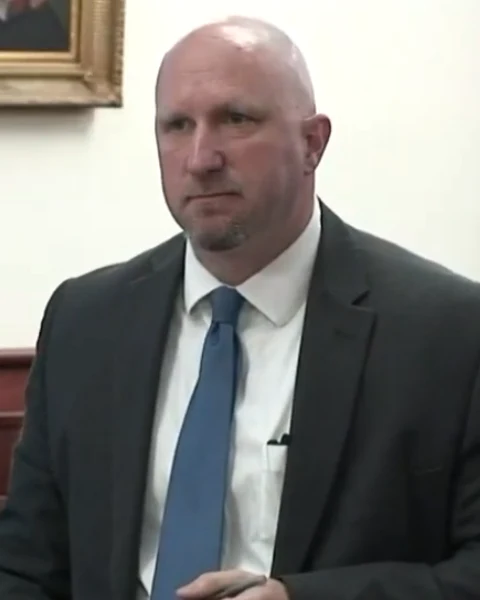
Defense attorney for Timothy Ray Jones, Jr. in the 2019 Lexington County trial.
Appeared2019 Murder Trial
2,303 lines·68 proceedings
About
Robert Madsen served as defense counsel for Timothy Ray Jones, Jr. and participated in jury selection, witness examinations, evidentiary disputes, and later trial proceedings. During individual juror questioning, he described his role as one of Jones's lawyers and asked prospective jurors about their personal views and ability to be fair and impartial.
Madsen's questioning addressed both factual and mental-health-related themes. He asked forensic drug analyst Keith McMahan about AB-Pinaca and the timing of restrictions, receiving testimony that the drug's effects on the human body were outside the analyst's expertise. In a defense examination, his questions moved chronologically through symptom onset, untreated illness, evaluation, medication, and recovery.
On redirect of Sergeant Adam Creech, Madsen elicited that Jones voluntarily spoke with investigators and that his cooperation made the investigation easier. He also addressed an unrecorded May 9 conversation, Creech's failure to follow up on a request to contact Jones's mother, and reported statements and emotional reactions attributed to Jones. At the same proceeding, the court reaffirmed its exclusion of Exhibits 109 through 113, autopsy-room photographs, finding them prejudicial and not reflective of the condition in which Jones left the bodies.
Madsen also redirected DSS caseworker Sherry Henry on the closure of a 2014 case and the written terms of a later safety plan. Henry read conditions concerning care for a diaper rash, basic care, and cleaning the trailer; she agreed the written plan did not state a no-corporal-punishment condition, though she described that as its intended meaning. The court admitted Defendant's Exhibit 235 after discussion of an earlier copy.
Key Points
Madsen elicited testimony that Jones voluntarily spoke with investigators and that his cooperation made their work easier, while also questioning Creech about an unrecorded conversation and an unpursued request to contact Jones's mother. [1]
Madsen used a DSS safety plan to distinguish its written conditions from Henry's statement about its intended corporal-punishment restriction; the court admitted Defendant's Exhibit 235. [1]
Madsen asked the forensic drug analyst about AB-Pinaca's effects and the timing of federal and Mississippi restrictions, and the analyst said the substance's effects on the human body were outside his expertise. [1]
Madsen organized a defense examination around symptom onset, untreated illness, evaluation, medication, and recovery. [1]
Attorney insights (5)
2019 Murder Trial41
Madsen's redirect of Sergeant Adam Creech addressed Jones's cooperation with investigators, the reported circumstances surrounding his statements, and omissions in the investigation. [1]
In the defense case, Madsen elicited a chronological lived-experience account moving through symptom onset, untreated illness, evaluation, medication, and recovery. [1]
Madsen redirected DSS caseworker Sherry Henry about prior case closure and the written terms of a later safety plan, including what the plan did and did not state. [1]
Madsen tested the completeness of Creech's account by addressing an unrecorded interview and an investigative step Creech did not take. [1]
Trial Record (68)
Robert Madsen was defense counsel who questioned prospective jurors, examined witnesses, and addressed evidentiary and investigative issues during the trial.
Jury Selection Day 1
Jury Selection Day 4
Jury Selection Day 6
Jury Selection Day 7
Jury Selection Day 8
Jury Selection Day 9
Jury Selection Day 10
Day 11
Day 12
Day 13
Day 14
Day 15
Day 16
Day 17
Day 18
Day 19
Day 20
Day 21
Day 22
Day 26
Day 27
Day 28
Day 29
Day 32
No proceedings match this filter.