Dr. Beverly Wood testified as Jones's treating psychiatrist about his reported symptoms, medication, and a working diagnosis of schizo-affective disorder. Cross-examination addressed the limits of her treatment role and the information available to her.
Expert witness
Beverly Wood
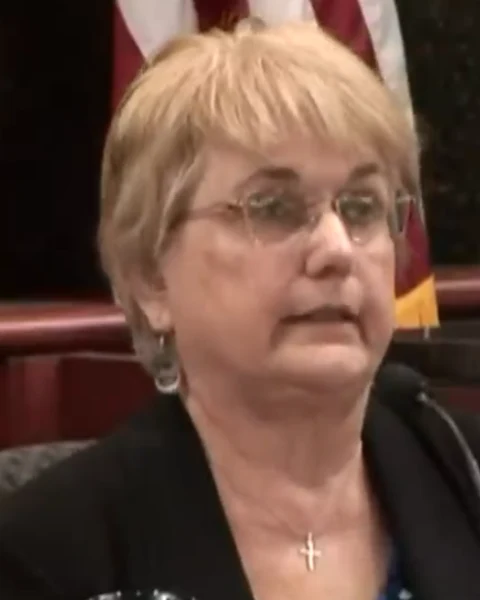
Psychiatrist who served as chief of psychiatry for the South Carolina Department of Corrections.
Appeared2019 Murder Trial
143 lines·11 proceedings·8 mentions
About
Dr. Beverly Wood, chief of psychiatry for the South Carolina Department of Corrections, testified on Day 23 as Jones's treating psychiatrist. She described treating him from September 2014 through December 2018, his reported symptoms, a working diagnosis of schizo-affective disorder, and medication including Geodon. Wood said medication reduced his reported auditory hallucinations and that she had not observed signs of manipulation.
Wood also said she believed Jones had an underlying mental illness that drug use could have exacerbated. The court required defense counsel to rephrase a question after a scope objection before that testimony.
On cross-examination, Mayes distinguished Wood's prison-treatment role from a forensic evaluation and questioned her reliance on reported symptoms, absent observations, and missing information such as phone and work records. Wood said she was not offering an opinion about Jones's state of mind on August 28, 2014. She acknowledged that she had not seen disorganized behavior or a response to internal stimuli, while explaining that the latter did not rule out hallucinations.
On redirect, Wood explained that disorganized thinking was not required for the diagnoses discussed because it was one of several criteria. She also confirmed that she was appearing as a treating psychiatrist and was not being paid to testify.
Key Points
Wood described treating Jones from September 2014 through December 2018, using medication adjustments in response to reported symptoms and working toward a schizo-affective-disorder diagnosis. [1]
Wood did not offer an opinion on Jones's state of mind on August 28, 2014, and acknowledged limits in the information and observations available to her. [1]
On redirect, Wood explained that disorganized thinking was not a required criterion for the diagnoses discussed and confirmed she was appearing as an unpaid treating psychiatrist. [1]
Trial Record (11)
No proceedings match this filter.