Richard Frierson, a court-appointed forensic psychiatrist called by the defense, testified that Jones could distinguish legal and moral right from wrong despite diagnoses related to substance use.
Expert witness
Richard Frierson
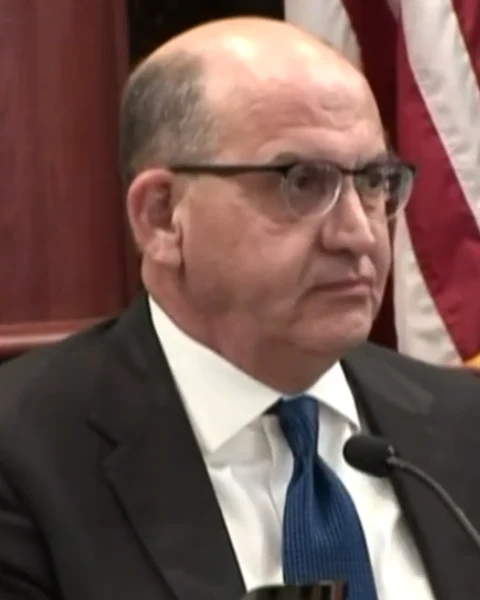
Forensic psychiatrist and University of South Carolina psychiatry professor who provided forensic evaluations for the state Department of Mental Health.
Appeared2019 Murder Trial
796 lines·34 proceedings·31 mentions
About
Richard Frierson, a court-appointed forensic psychiatrist called by the defense, testified on Day 22 about his evaluation of Timothy Ray Jones, Jr. He described interviews, records, reported symptoms, substance use, brain-injury information, and Jones's reported accounts of the deaths and later conduct.
Frierson diagnosed substance-induced psychotic disorder associated with spice use, severe cannabis-use disorder, and mild alcohol-use disorder. He nevertheless testified that Jones could distinguish legal and moral right from wrong at the time of the alleged offenses. He also acknowledged that other psychiatrists could review the same information and reach a different opinion.
During cross-examination, the State examined Frierson about his qualifications, the materials he reviewed, reported voices, diagnoses, and his conclusions about wrongfulness and capacity to conform conduct to the law. Frierson said the reported voices were anxious thoughts rather than persistent auditory hallucinations, and he did not find support for schizophrenia or significant cognitive impairment.
On redirect, defense counsel returned to the earlier competency evaluation, reported thoughts, symptom masking, family mental-health history, and post-death conduct. Frierson agreed that a person could try to hide or deny symptoms.
Key Points
Frierson testified that Jones could distinguish legal and moral right from wrong at the time of the alleged offenses, while diagnosing substance-induced psychotic disorder associated with spice use, severe cannabis-use disorder, and mild alcohol-use disorder. [1]
Frierson testified that the reported voices were anxious thoughts rather than persistent auditory hallucinations, and that he found no support for schizophrenia or significant cognitive impairment. [1]
Frierson agreed that a person could attempt to hide or deny symptoms, a point the defense raised while questioning him about the earlier competency evaluation and reported thoughts. [1]
Trial Record (34)
No proceedings match this filter.