Deputy Solicitor Suzanne Mayes represented the State through jury selection, guilt-phase proof, challenges to the defense's mental-health evidence, and the penalty phase. Her questioning focused particularly on the sources and limits behind drug and psychiatric opinions, while her penalty-phase work developed evidence about the children and the jury's choice between life without parole and death.
ProsecutionEleventh Circuit Solicitor's Office
Suzanne Mayes
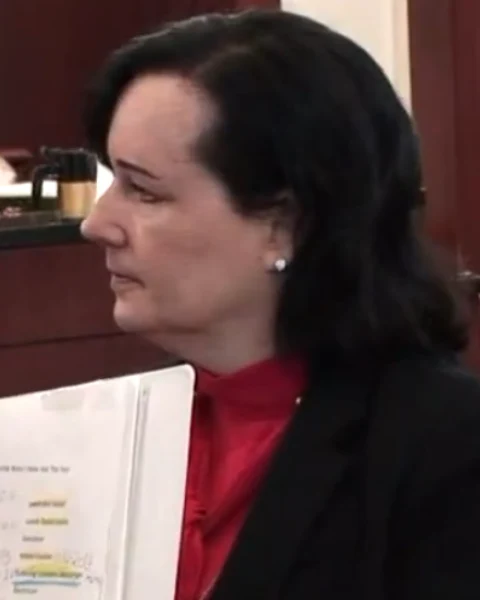
Lexington County deputy solicitor who represented the State of South Carolina.
Appeared2019 Murder Trial
2,795 lines·69 proceedings
About
Deputy Solicitor Suzanne Mayes represented the State across jury selection and both trial phases. During individual voir dire, she asked whether prospective jurors could follow the court's instructions, consider aggravating and mitigating evidence, weigh both life without parole and death, and sign a unanimous death verdict if they found it warranted. The court decided juror qualifications and limited some repeated or deliberation-focused questions.
Before guilt-phase testimony began, Mayes told the court that the State anticipated presenting drug-use evidence in response to the insanity defense; the parties and court then defined the scope and redactions. Her direct examinations developed evidence about a phone extraction, the children's school absence and last pickup, later communications with Jones, AB Pinaca's reported effects and research limits, and Amber Kyzer's custody arrangements, August call, and voicemails.
Mayes concentrated much of her defense-case questioning on the foundations of mental-health and drug-effect opinions. She challenged Jonathan Lipman's knowledge of prescription and Chantix use, the basis for his AB Pinaca opinion, and his reliance on self-reported information, then questioned Bhushan Agharkar about his diagnosis, sources, and medication analysis. The court separately resolved objections to the form and repetition of Lipman questions and limited part of the Chantix questioning during Agharkar's cross-examination.
Her cross-examinations also compared psychiatric claims with contemporaneous records and lay observations. Sherry Henry was questioned about DSS findings, safety plans barring corporal punishment, and gaps in her records and knowledge. Workplace testimony addressed agitation and sweating while limiting what the witness had observed about violence or mental instability, and Mayes used a prior statement to distinguish reports of substance use and self-talk from any reported hallucinations or loss of reality. During Beverly Wood's cross-examination, Mayes explored gaps in the treatment information Wood received; the court separately cautioned the prosecution about characterizing Jones's cocaine use.
In the penalty phase, Mayes presented the State's opening and examined school witnesses about the children's lives, accomplishments, photographs, and the continuing impact of their deaths. She argued that school-mural photographs were admissible as evidence of a tribute; the court admitted the disputed school and mural photographs while barring references to outside fundraising. Her later questioning of Amber Kyzer addressed videos of the children, alleged violence during the marriage, and Kyzer's sentencing views, followed by recross confirming that Kyzer was not responsible for the sentencing decision.
Trial Record (69)
No proceedings match this filter.