Timothy Ray Jones, Jr. faced five murder indictments and pleaded not guilty by reason of insanity, making his mental condition a central issue at trial. The jury found him guilty on all five indictments, unanimously recommended a death sentence, and the court imposed that sentence.
DefendantDefense
Timothy Ray Jones, Jr.
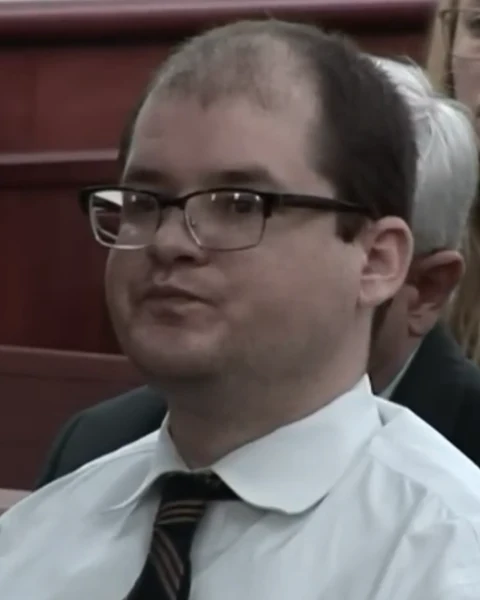
Defendant convicted on five murder counts in the 2019 Lexington County trial.
Appeared2019 Murder Trial
26 lines·201 proceedings·197 mentions
About
Timothy Ray Jones, Jr. faced five murder indictments alleging the killings of his children and entered a plea of not guilty by reason of insanity. The plea placed his mental condition at the center of the guilt phase.
The State's proof included an investigator's account of statements attributed to Jones after Miranda advisements and the multi-agency search that located the children in garbage bags at a wooded loading zone. The parties stipulated that blood collected from Jones tested positive for AB Pinaca, and receipt evidence led to a duplicate purchase that included drawstring trash bags and sunglasses.
The defense developed its insanity case through mental-health and brain-imaging evidence. Dr. Travis Snyder interpreted an MRI as showing structural findings he related to traumatic brain injury, while cautioning that imaging alone could not establish Jones's individual symptoms or diagnose schizophrenia or schizoaffective disorder. Psychiatrist Julie Dorney maintained that the records showed a broader pattern and a diagnosable illness, while the prosecution challenged the reliance on self-report, other diagnoses in the records, testing limits, and substance use as an alternative explanation. In a separate dispute over psychological testing, the court left in place its prior ruling that the testing formed part of Dr. Richard Frierson's complete evaluation.
During the penalty phase, Deborah Grey described a social-history investigation that included reported abuse and mental-health experiences. Cross-examination addressed the limits of her sources, the lack of corroboration for some information Jones supplied, and questions about education, treatment, medication, and substance use. Grey said she could not assess his reliability on matters she was unable to corroborate.
On Day 24, Jones voluntarily declined to address the jury during guilt-phase closing arguments. The jury returned guilty verdicts on all five indictments on Day 25. During the sentencing phase on Day 31, the court confirmed that Jones understood his rights to testify and address the jury, and he declined both. On Day 32, the jury unanimously recommended a death sentence, and the court formally imposed that sentence.
Trial Record (201)
No proceedings match this filter.