Boyd Young represented Timothy Ray Jones, Jr. at trial, developing the insanity defense through expert and fact-witness examinations, challenging investigative and forensic evidence, and arguing that mental illness, traumatic brain injury, and psychosis prevented Jones from appreciating legal or moral wrongfulness. In the penalty phase, he presented mental-health and mercy evidence and argued for life without parole while preserving disputes over graphic exhibits and mitigation instructions.
Defense
Boyd Young
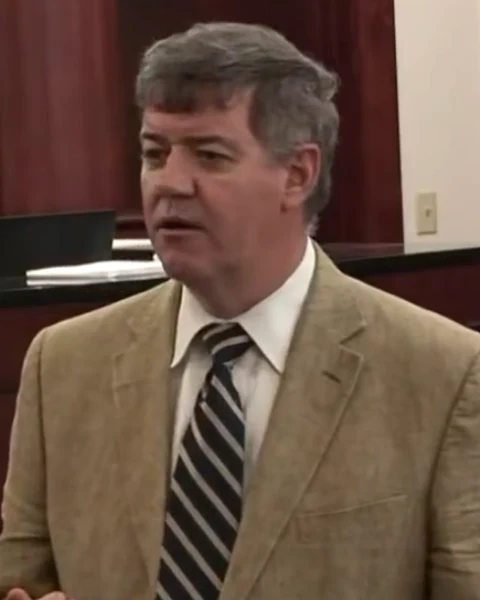
Defense attorney for Timothy Ray Jones, Jr. in the 2019 Lexington County trial.
Appeared2019 Murder Trial
5,331 lines·143 proceedings·1 mention
About
Boyd Young represented Timothy Ray Jones, Jr. and was a principal advocate for the insanity defense. During jury selection, he pressed whether prospective jurors could consider both an insanity verdict and life without parole, while the court set limits on the questions.
In guilt-phase cross-examinations, Young tested witnesses' observations of Jones's mental condition and challenged the reliability and completeness of investigative accounts. He elicited that an initial conversation was unrecorded and undocumented, questioned errors and an unrecorded portion of an FBI interview, compared a correctional officer's timeline with medical records, and established that a phone report selected 1,240 artifacts from roughly 24,750 data points. He also questioned the forensic pathologist about decomposition limits and changes to cause-of-death certificates.
As the defense presented its case, Young developed evidence about brain injury, psychiatric symptoms, and criminal responsibility. His examinations of Travis Snyder and Erin Bigler addressed imaging findings, cumulative effects of brain injury, behavioral and emotional regulation, and a revised hypothetical involving family history, scan findings, and reported hallucinations. He questioned April Hames about counseling records, reported symptoms, and possible masking of schizophrenia symptoms; Beverly Wood about treatment and a schizo-affective-disorder diagnosis; and Julie Dorney about collateral sources and her criminal-responsibility opinion supporting the insanity defense.
In his Day 24 closing argument, Young asked jurors to consider brain images, expert testimony, medical records, recordings, and Jones's statements together. He argued that family history, adverse environment, traumatic brain injury, mental-health symptoms, and the effects of Spice and Chantix supported a finding of legal insanity. He also challenged what he described as the State's selective use of Jones's incriminating statements and reliance on changed or unrecorded accounts while discounting evidence of voices, paranoia, and psychosis.
In the penalty phase, Young shifted the defense presentation to life without parole. His opening asked jurors to consider Jones's whole life, and his examinations covered spiritual life, schizophrenia, testing related to malingering, family relationships, and pleas for mercy.
Trial Record (143)
No proceedings match this filter.