Erin Bigler testified for the defense as a neuropsychology expert on Day 19, interpreting MRI findings and explaining possible effects of brain injury. Under cross-examination, he limited what imaging could establish about diagnosis, behavior, and legal understanding.
Expert witness
Erin Bigler
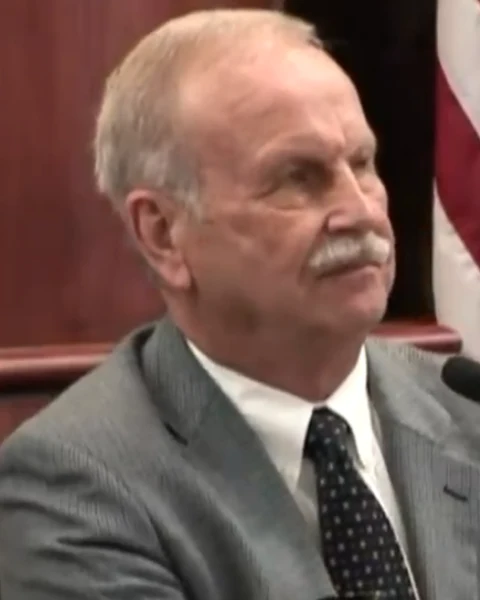
Retired Brigham Young University professor of psychology and neuroscience who directed MRI research there.
Appeared2019 Murder Trial
137 lines·8 proceedings·4 mentions
About
Erin Bigler testified for the defense on Day 19 as a neuropsychology expert. After the court accepted him as an expert, he interpreted MRI findings that he associated with an old traumatic brain injury and discussed possible effects of frontal and temporal injury on executive function, emotional regulation, cognition, and behavior.
On cross-examination, Bigler drew limits around those opinions. He said imaging could not show that an injury caused the killings, determine whether Jones knew right from wrong, or diagnose schizophrenia from a scan; he described traumatic brain injury as a possible risk factor in some circumstances, not a guarantee of schizophrenia.
On redirect, Bigler said a revised hypothetical involving family history, scan findings, and auditory hallucinations was consistent with schizophrenia, while explaining that diagnosis usually requires a psychologist and psychiatrist. On recross, he agreed that the assessment discussed required clinical correlation, interview, and mental-status examination, not imaging alone.
Key Points
Qualified as an expert in neuropsychology, Bigler interpreted MRI findings that he associated with an old traumatic brain injury and discussed possible effects on executive function, emotional regulation, cognition, and behavior. [1]
Bigler said imaging could not determine whether the injury caused the killings, whether Jones knew right from wrong, or whether Jones had schizophrenia. [1]
Bigler said a hypothetical combination of family history, brain-scan findings, and auditory hallucinations was consistent with schizophrenia, subject to his explanation that diagnosis is generally a team process. [1]
Bigler agreed that evaluating the issue discussed required clinical interviews and mental-status examination in addition to imaging. [1]
Trial Record (8)
No proceedings match this filter.