Cross-examination of defense experts on the limits, sources, and corroboration of their opinions. [1][2]
Prosecution· Prosecution
Rick Hubbard
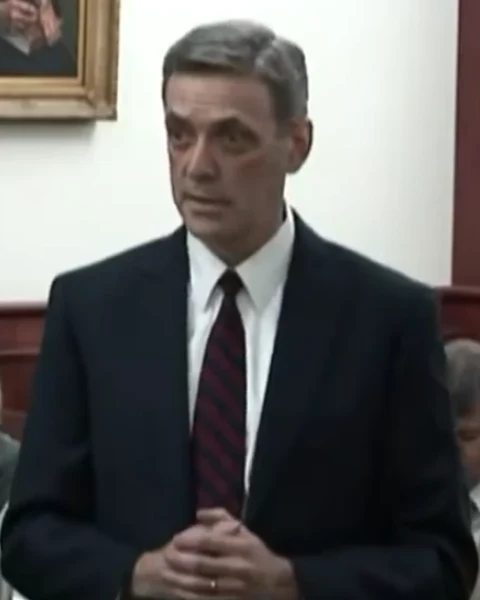
Lexington County solicitor who represented the State of South Carolina in the prosecution of Timothy Ray Jones, Jr.
Appeared2019 Murder Trial
4,521 lines·137 proceedings
About
Solicitor Rick Hubbard prosecuted the case for the State, examining witnesses, litigating evidentiary issues, and delivering the State's closing argument. His questioning of Sergeant Adam Creech addressed Jones's reported interview statements, changing accounts, and conduct that Hubbard argued bore on awareness of wrongdoing. When the defense objected to that line of questioning, the court excused the jury for a proffer; the record describes the issue but does not supply a substantive ruling on the objection.
Hubbard also cross-examined defense experts about the foundations and limits of their opinions. With neuropsychologist Erin Bigler, he questioned whether imaging could determine causation, legal awareness, or schizophrenia, as well as the need to investigate malingering and assess reported symptoms through methods beyond imaging. With social worker Deborah Grey, he explored compensation, uncorroborated reported history, the limits of her investigation, and whether she could assess Jones's reliability about those reports.
In his closing argument, Hubbard maintained that the State had proved Jones's legal responsibility for the children's deaths and that the defense had not met its burden to prove insanity. He challenged the defense experts' diagnoses and testing, relied on the opinions of Dr. Frierson and Dr. Kruse, and argued that reported conduct before and after the deaths showed planning and awareness of wrongdoing. Hubbard asked the jury for justice for the five children.
Key Points
Hubbard tested whether Erin Bigler's brain-imaging opinions could establish causation, legal awareness, or schizophrenia. [1]
Hubbard questioned Deborah Grey about uncorroborated portions of her psychosocial history and the limits of her investigation. [1]
Hubbard used Sergeant Adam Creech's account of Jones's interview statements and conduct to address awareness of wrongdoing. [1][2]
In closing, Hubbard argued that the defense had not proven insanity and that the reported conduct showed planning and awareness of wrongdoing. [1]
Hubbard's cross-examination of Timothy Jones, Sr. addressed his observations of his son's earlier life, family relationships, and later behavior. [1]
Attorney insights (6)
2019 Murder Trial33
Questioning of Sergeant Adam Creech about Jones's interview accounts and conduct bearing on awareness of wrongdoing. [1][2]
Closing argument that the State had proved guilt and that the defense had not carried its burden on insanity. [1]
Hubbard questioned whether imaging could establish causation, legal awareness, or a schizophrenia diagnosis, and whether Bigler had assessed malingering or relied on materials supplied by those who retained him. [1]
Hubbard questioned what information supported Grey's account, what could not be corroborated, and whether she could assess Jones's reliability about reported experiences. [1]
Hubbard pursued Creech's observations of Jones's statements and conduct. The defense objected, and the jury was excused for a proffer on the relevance of that evidence. [1]
Trial Record (137)
Solicitor Rick Hubbard prosecuted the case for the State, questioning witnesses and experts about Jones's statements, conduct, and the foundations of the defense's insanity evidence. In closing, he argued that the State had proved legal responsibility and that the defense had not met its burden to prove insanity.
Jury Selection Day 1
Jury Selection Day 2
Jury Selection Day 3
Jury Selection Day 4
Jury Selection Day 5
Jury Selection Day 6
Jury Selection Day 7
Jury Selection Day 8
Jury Selection Day 9
Jury Selection Day 10
Day 11
Day 12
Day 13
Day 14
Day 15
Day 16
Day 17
Day 18
Day 19
Day 20
Day 21
Day 22
Day 23
Day 24
Day 25
Day 26
Day 27
Day 28
Day 29
Day 30
Day 31
Day 32
No proceedings match this filter.