Defense witnesses addressed Jones's mental-health history, counseling, religious practice, and house materials; the court deferred a ruling on a video of his mother.
Full day summary
For Day 18, the defense continued presenting testimony about Timothy Jones's mental health, religious beliefs, counseling history, and materials from the South Lake Drive house. Sergeant Adam Creech completed his testimony, including accounts of Jones's interviews and cooperation with investigators; the court reaffirmed its exclusion of five autopsy-room photographs and admitted State's Exhibit 145 subject to an earlier objection.
Dr. Bhushan Agharkar, qualified in adult and forensic psychiatry, testified that his assessment found schizophrenia and a minor neuro-cognitive disorder. On cross-examination, he said he was not offering an opinion on criminal responsibility or whether Jones knew right from wrong at the time of the killings. The court marked his materials list and report for identification rather than admitting them as defense exhibits.
Pastor Micah Sutton described Jones's intense, literal religious practice and periods of difficult communication. Marriage and family therapist April Hames described counseling Jones in 2012 and 2013, including marital distress and her assessment after he reported wanting to strangle Amber. She said he did not endorse a plan or timeline to harm her. The State questioned Hames about the absence of psychotic symptoms she observed during treatment, while she later testified that schizophrenia symptoms may sometimes be masked depending on their severity.
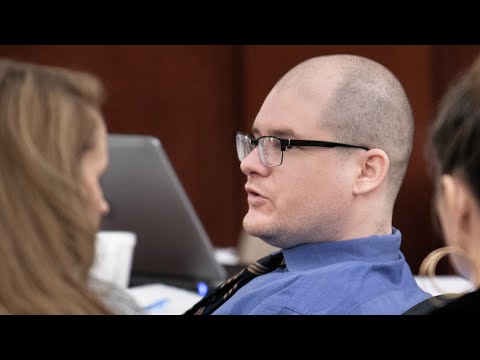
The court also heard identification testimony about materials brought from the South Lake Drive house. At the close of the day, the court excused the jury while it reviewed a video of Jones's mother, Cynthia Turner. The video and a New York order were marked for identification only, and the court deferred its ruling on publication.
 9:59:50