Casey Secor served as defense trial counsel, questioning jurors about insanity and capital sentencing, examining witnesses on mental health and family history, contesting evidentiary limits, and urging life without parole. His penalty-phase work centered on social-history mitigation and relatives' requests for mercy, while the court limited graphic detail and reserved the governing law for its instructions.
Defense
Casey Secor
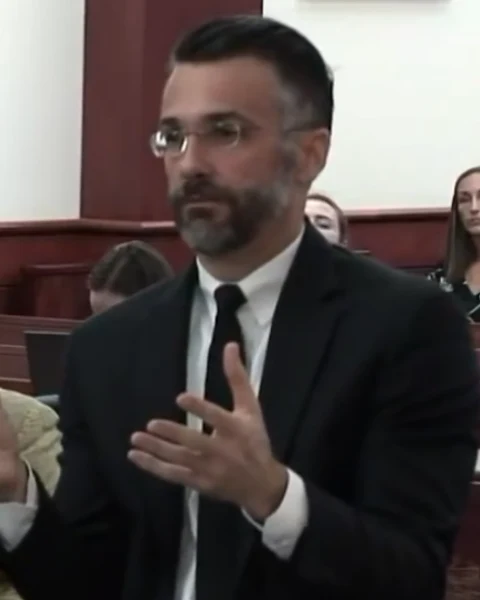
Defense attorney for Timothy Ray Jones, Jr. in the 2019 Lexington County trial.
Appeared2019 Murder Trial
3,310 lines·72 proceedings·1 mention
About
Casey Secor represented Timothy Ray Jones, Jr. for the defense during jury selection, the presentation of evidence, and the penalty phase. During jury selection, Secor questioned prospective jurors about whether they could consider insanity-related verdicts and both life and death as sentencing choices.
Secor's witness examinations developed mental-health evidence and observations of Jones's behavior, work, religion, childhood, and family environment. He examined Dr. Bhushan Agharkar about how brain-injury symptoms can be interpreted; Agharkar testified that his assessment found schizophrenia and brain injury and rejected substance-induced psychosis. Secor also examined Micah Sutton about Jones's intense religious practices and used family members and coworkers to develop changes in his work, relationships, and behavior. On cross-examination of Dr. Kimberly Kruse, Secor contrasted her conclusions with computer-generated test language and elicited that one SIMS score was below its stated malingering cutoff, while Kruse maintained that Jones overreported psychotic symptoms and gave full effort on cognitive tests.
In the penalty phase, Secor returned to family and social history as mitigation. He examined Roberta Thornsberry, Timothy Jones, Sr., Deborah Grey, and other relatives about childhood conditions, family patterns, relationships, and requests for mercy. When the court restricted the scope of Grey's testimony, Secor objected that the limits impaired his advocacy. The court said it was streamlining the testimony rather than adopting the State's objections, allowed general questions about how trauma and violence in a home can affect child development, and excluded unnecessary graphic detail.
In closing, Secor acknowledged the seriousness of the crimes and the established aggravating circumstances but argued that those circumstances made death available rather than required. He urged life without parole based on mitigation, mercy, and family members' requests against another death.
Trial Record (72)
No proceedings match this filter.